





China tours
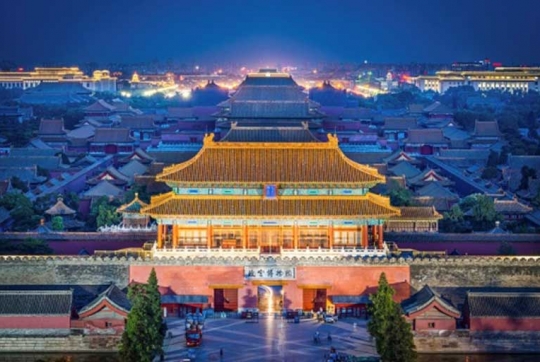
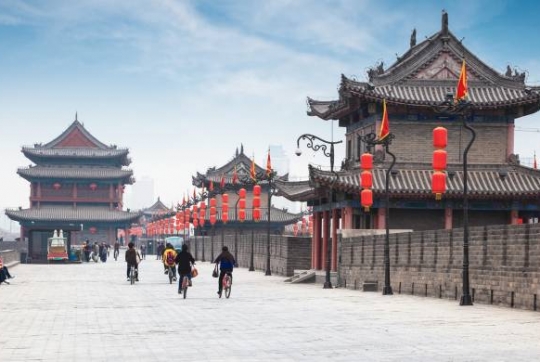
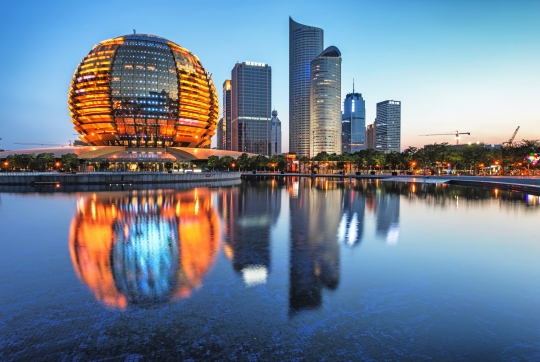
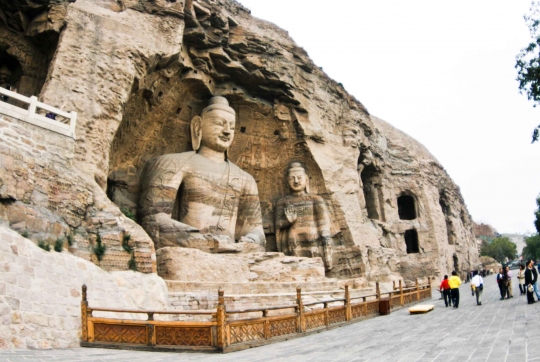
As the most populous country in the world with 1.3 billion people, China has established itself as a major economic and historical hub in Asia. With an abundance of tourism resources, the country boasts a rich and diverse cultural heritage, being one of the four ancient civilizations. From the iconic Great Wall, to the Terra Cotta Army, and the Forbidden City, there’s no shortage of historical and cultural landmarks to explore. Additionally, China’s modern cities are equipped with all the amenities of any international destination, offering a wide array of restaurants, shopping, and entertainment options. Stretching across 50 degrees of latitude, the country boasts diverse natural beauty, from the tropical beaches of Hainan Island to the unique rime in northeast China. Come and experience the rich culture and stunning natural beauty of this remarkable country on a unique and unforgettable trip!








Passport & Visa
Ordinary passport holders from Singapore, Brunei, and Japan are exempt from visa requirements when entering China through ports open to foreigners, with a maximum stay of up to 15 days for purposes of tourism, business, or visiting relatives and friends.
Foreign tour groups (five persons or more) from selected countries are eligible for visa-free entry to Hainan Island, with a maximum stay of up to 15 days.
In addition, German, Korean, and Russian nationals may stay in China for up to 21 days when joining approved outbound tours with a minimum of two participants.
See further information at:
https://en.nia.gov.cn/n147418/n147463/c180637/content.html
Currency
The official currency of China is the Renminbi (RMB), also known as the Chinese Yuan.
Currency code: CNY
Abbreviation: RMB
Chinese name: Ren Min Bi (人民币)
Symbol: ¥
Main unit: Yuan (元)
Subunits: Jiao (角) and Fen (分)
Major international credit cards such as Visa, MasterCard, American Express, Diners Club, and JCB are accepted in most large cities for cash withdrawals and payments. However, credit card usage is limited in rural and remote areas.
Currency exchange services are commonly available at luxury hotels (for in-house guests only), currency exchange counters at major airports, and banks in city centers (passport required).
In remote areas, access to ATMs and currency exchange services may be limited. Travelers are advised to carry sufficient cash when visiting these regions.
Exchange rates vary and are subject to change. Please check the latest rates before departure.
Weather
The vast nation of China boasts a wide variety of climates, strongly influenced by latitude differences and the monsoon season. Stretching from the tropics to the subarctic, the country features multiple climate zones across its vast territory.
During summer, warm and humid monsoons from the oceans bring high temperatures and heavy rainfall, with relatively small regional temperature differences. From south to north, China can be broadly classified into equatorial, tropical, subtropical, warm-temperate, temperate, and cold-temperate zones.
The southeastern regions receive the highest rainfall, while the northwestern areas are the driest. In the hot season, monsoon systems affect most of the eastern and central parts of China.
For travelers, spring (late April to early June) and autumn (September to October) are considered the best times to visit China, offering pleasant weather, comfortable temperatures, and beautiful natural light.
The far south has a tropical climate, while the southwest is mainly subtropical, characterized by hot, humid summers and mild winters, especially in Hainan. In contrast, northern regions, mountainous areas, and high plateaus often experience average January temperatures below –10°C (14°F), whereas the southeast remains much milder, with winter temperatures around or above 15°C (59°F).
Vaccinations & Medicines
Travelers are not required to receive mandatory vaccinations before traveling. However, the CDC and WHO recommend that travelers be vaccinated against common diseases such as typhoid, hepatitis A and B, rabies, Japanese encephalitis, polio, and seasonal influenza.
To reduce the risk of minor illnesses during your trip, it is advisable to carry basic personal medications, including paracetamol, aspirin, allergy medication, and other essential medicines.
Phone & Internet Service
Phone calls:
To make an international call to China, dial 00 + 86 (China country code) + city code (without the leading 0) + the local phone number.
Internet access:
In many major Chinese cities, public Wi-Fi is widely available, especially in airports, hotels, cafés, and shopping areas. However, internet access in China is strictly regulated, and popular platforms such as Facebook, Twitter (X), YouTube, and some other international websites are restricted or blocked.
Travelers can access the internet via China’s 4G/5G mobile networks by using a local SIM card.
Alternatively, renting a portable Wi-Fi device (MiFi) is a convenient and cost-effective option for travelers who mainly need internet access without making phone calls.
MiFi devices can be reserved online in advance and conveniently picked up at the airport upon arrival or delivered directly to your accommodation.
Flights & Airports
- Beijing Capital International Airport (PEK)
- Shanghai Pudong International Airport (PVG)
- Shanghai Hongqiao International Airport (SHA)
- Chengdu Shuangliu International Airport (CTU)
- Hong Kong International Airport (HKG)
Security
Mainland China is generally considered a safe destination for foreign travelers, especially those joining organized or well-planned tour packages. The political and social environment in mainland China is stable, and security levels are often perceived as higher than in some surrounding regions such as Hong Kong or Macau.
That said, visitors should still remain cautious of common petty crimes, including pickpocketing, scams, traffic-related incidents, and dishonest vendors, which can occur in any major tourist destination worldwide.
In crowded tourist areas, travelers are advised to be particularly alert to tourist scams. One common example is the so-called “tea tasting,” “bar invitation,” or “massage” scam, where visitors are invited into a venue and later pressured to pay excessively high charges for services they did not expect.
Language
Mandarin (Standard Chinese) is the official and dominant language used throughout mainland China. In addition, each region has its own local dialect, reflecting the country’s rich linguistic diversity. Although regional dialects vary, Mandarin serves as a common language, allowing effective communication nationwide.
Tour guides in China typically communicate fluently in Mandarin and are well-trained to assist international travelers. Many guides are also bilingual, most commonly speaking English, Japanese, or Korean.
A smaller number of guides are multilingual professionals, capable of providing services in multiple foreign languages and offering deeper cultural interpretation for international visitors.
This linguistic support ensures that travelers on organized tours can communicate comfortably and enjoy a smooth, well-guided experience throughout their journey in China.
Time difference
Although China spans more than 60 degrees of longitude—equivalent to approximately four hours of solar time difference—the entire country follows a single official time zone.
All provinces and regions in mainland China operate on Beijing Time (China Standard Time, UTC+8), regardless of their geographical location.
This unified time system makes travel planning, transportation schedules, and tour coordination simpler and more convenient for both domestic and international travelers.
Electricity
The standard electrical supply in mainland China, Hong Kong, and Macau is 220 volts, 50 hertz (AC).
In contrast, Taiwan uses a different system with 110 volts, 60 hertz, similar to the United States and Japan.
As voltage levels and socket types vary by country, international travelers are strongly advised to bring a universal plug adaptor to ensure compatibility with local outlets.
In mainland China, the most commonly used socket types are:
-
Type A sockets – widely used in the United States, Canada, Mexico, Japan, the Philippines, Thailand, Vietnam, and several other countries
-
Type I sockets – also commonly found in certain locations
Additionally, Type C and Type F plugs, which are standard in most European countries, can usually be used with Type A sockets in China.
On-site traffic
China offers a wide range of transportation options that are convenient, affordable, and well-developed, making travel easy for international visitors.
-
Shared Bicycles: Widely used in major cities and perfect for short distances. Travelers can download apps such as Hello Bike, Didi Qingju, or Meituan Bike. The cost is very low, around 1.5 RMB for 30 minutes.
-
Aircraft: Air travel is fast and comfortable, ideal for long distances despite higher fares. China’s major international airports are located in Beijing, Shanghai, Guangzhou, and Hong Kong, connecting both domestic and international routes.
-
Bus: Buses are an economical and eco-friendly option, with fares typically ranging from 1–2 RMB. However, travel times may vary depending on traffic conditions.
-
High-Speed Rail: One of the most efficient and cost-effective ways to travel between cities. China’s high-speed train network is modern, punctual, and highly recommended for tourists.
-
Subway: Metro systems operate in major cities such as Beijing, Shanghai, Guangzhou, Shenzhen, and Hong Kong, offering a fast and reliable way to get around urban areas.
-
Taxis: Taxis are widely available and reasonably priced, providing a convenient door-to-door transportation option, especially for travelers unfamiliar with public transport.
Note: ❗ Pets are not permitted on public transportation in China.
