



Philippines tours
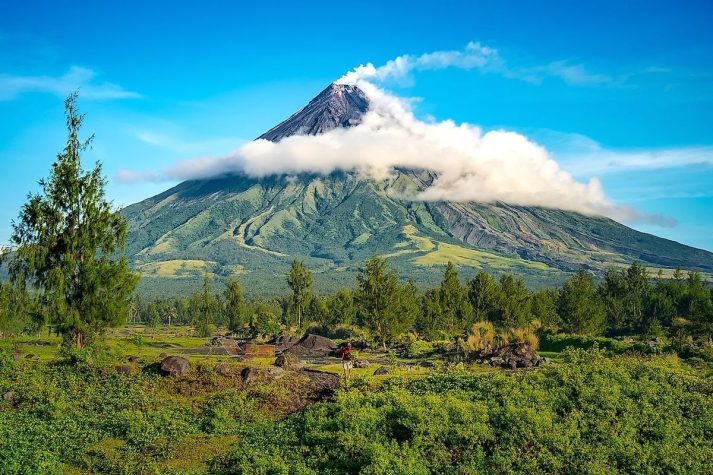
The Philippines is an archipelago that offers an abundance of water and land activities that are sure to appeal to travelers of all interests. For those who love the ocean, surfing and scuba diving are a must – you can even get certified while you’re here. For those who prefer to take in the rich land, the lush forests, breathtaking beaches, and tropical hotspots of the islands are not to be missed. In addition to its natural beauty, the Philippines is known for its friendly locals who will make your vacation even more memorable. With one of the longest coastlines in Asia, the Philippines is a popular destination for its stunning beaches and crystal-clear waters. Some of the most well-known beaches include Boracay Island, El Nido, and Camiguin Island. Whether you’re exploring the islands’ nightlife scenes, such as Manila and Boracay, or simply relaxing on the beach, the Philippines is an adventure that you won’t soon forget.


Passport & Visa
Passport
It is a requirement of The Philippines’s Government that British visitors to the country possess a valid 10 year passport and that the passport has at least six months validity left after your return from holiday. Please check that your passport complies with this decree well in advance of travel. If you do not have a British passport please contact the Philippine Embassy to see what regulations do apply.
Visa
Generally, foreign nationals who wish to enter the Philippines is not required a visa if:
- He/she is a citizen of a member state of the Association of Southeast Asian Nations (ASEAN)
- He/she is a citizen of a non-ASEAN member state whose nationals are allowed to enter the Philippines visa-free [1]
- He/she is a balikbayan and is only returning to the Philippines temporarily
Visa Exempt
Visa exempt for a stay of up to 30 days. The tourist must hold:
- Notarized application form duly prescribed by the Embassy.
- Actual passport of applicant (valid at least 6 months at the time of entry) and one (1) photocopy of the data page.
- Proof of ticket reservation..
- One colored 2” x 2” photo, taken within the last six (6) months from the date of application, showing a clear front view of the applicant’s face, with a white background. No sleeveless attire. Blurred or low-quality photos will not be accepted.
- Proof of financial capacity (photocopy of latest bank statement) and/or an employment certificate from the employer or letter of endorsement if attending or participating in a program.
- Self-addressed prepaid return envelope,preferably USPS Priority Mail, with tracking number, Do not use metered stamps or P.O. Box Return Address. Do not use Fedex. IMPORTANT: Please do not require a “signature to receive” on your package and do not use a box to send your documents.
- Visa fee of US$ 30.00 for nationals of visa-free countries; US$40.00 for nationals of non-visa-free countries (non-refundable) in cash or money order made payable to “Embassy of the Philippines”. Personal checks are not accepted.
- Acceptable proof of vaccination (against COVID-19) i.e. CDC vaccination record card, state issued vaccine records.
Currency
The Philippine peso (code: PHP), or ‘piso’ in Filipino, is the official currency of the Philippines. It's subdivided into 100 centavos, or ‘sentimos’ in Filipino. The symbol of the Philippine peso is ₱. As a former colony of the United States, the country used English on its currency. There are banknotes of 20, 50, 100, 200, 500 and 1,000 pesos and coins of 1, 5, 10, 25 sentimos; 1, 5, 10, 20 pesos.
U.S. dollars are sometimes accepted as an alternative form of payment. Carrying U.S. dollars while traveling in Asia is a good idea for emergencies.
Exchange rate
1 USD = 55,26 Peso (PHP)
1 USD = 59,28 Peso (PHP)
Travelers’ cheques are widely accepted in tourist areas, but can be expensive to change. If using travelers’ cheques US Dollars are the best type to take, but make sure you have local currency when leaving tourist areas as you will not be able to exchange them in rural areas.
All major credit/debit cards are popularly accepted in hotels and restaurants.
ATM are widespread throughout major cities in the Philippines such as Manila & Cebu but will not be available in remote parts of the country.
Weather
The best time to visit the Philippines is from December to February, when temperatures are around 75°F to 88°F. At this time the country is fully accessible, including its many beautiful islands and more remote areas. Although the dry season lasts from November to April, temperatures are high during March and April, with highs of 93°F.
The wet season falls between May and October, but the rain isn’t constant and rarely impacts on travel plans. You’ll still enjoy hot, sunny days at this time (expect temperatures in the early thirties), with fewer crowds and lush, green scenery.
It’s worth noting the weather can be unpredictable in the Philippines. Typhoons can sometimes occur as early as August or as late as January
Vaccinations & Medicines
Tourists should check the vaccines and medicines list and visit your doctor at least a month before your trip to get vaccines or medicines you may need.
The following vaccines are highly recommended by the Pasteur Institute:
- Routine vaccine:
- Chickenpox (Varicella)
- Diphtheria-Tetanus-Pertussis
- Flu (influenza)
- Measles-Mumps-Rubella (MMR)
- Polio
- Shingles
- Covid 19
- Cholera
- Hepatitis A & Hepatitis B
- Japanese Encephalitis
- Malaria
- Rabies
- Typhoid
Phone & Internet Service
To call the Philippines: 00 + 63 (country code) + province code (without 0 if there is one). There are 3 major service providers in the Philippines for your SMS and phone calls: Globe, Smart and Sun (plus few others). Pre-paid SIM cards are available for sale almost everywhere, it’s enough to get one from a reputable convenient store in one of your stops. You will also easily find small kiosks of those communication companies in airports
Internet Services can be very useful while travelling and through common apps. You could easily avoid costs of international calls and SMS, using your SIM card only for local calls if ever needed.
Costs depend on the network company you choose. Usually, you can purchase short-term prepaid Internet packages just by sending a text or through short codes. The most popular packages give you 1 GB of data for 3 days for the cost of 50 pesos. Other packages give 2 GB for 7 days for 99 pesos. Also longer-term packages are available.
Flights & Airports
In the Philippines, there are several international airports such as
- Diosdado Macapagal (Clark) International Airport
- Francisco Bangoy (Davao) International Airport
- General Santos International (Tambler) Airport
- Kalibo International Airport
- Laoag International Airport
- Mactan-Cebu International Airport
- Ninoy Aquino (Manila) International Airport
- Puerto Princesa International Airport
- Subic Bay International Airport
- Zamboanga International Airport
Security
Crime
There are high levels of street crime and robbery sometimes involving weapons and firearms. You should take sensible precautions.
Political situation
Keep up to date with local and international developments, and avoid demonstrations or large gatherings of people.
The Philippines Bureau of Immigration has specifically warned foreign nationals against participating in public protests and political rallies. Foreign nationals who participate in these activities may be detained and deported for violating Philippine immigration laws.
Language
The Philippines is a country of immense cultural diversity, including language. According to statistics, this country has 175 different languages. Today, people use two main languages including English and Filipino.
Time difference
Philippines time zone is UTC/GMT + 7, 5h.
Electricity
In the Philippines, the power sockets are of type A(mainly used in North and Central America, China and Japan), B(like type A but with an extra prong for grounding) and C( used in European countries). The standard voltage is 220 V and the standard frequency is 60 Hz.
If the standard voltage of your devices is in the range of 100 V - 127 V , a voltage converter should be in your packing list before traveling to the Philippines.
On-site traffic
- Jeepney: After the Second World War, Jeeps were redesigned to become more convenient for Filipinos. These days, jeeps are referred as private buses used commonly.
- Tricycle (Three-wheeled vehicle with engine):This vehicle is very popular in cities and resorts in the Philippines. The fares are quite cheap for short distance.
- Kalesa (carriage):This vehicle is only used for tourism purpose.
- Roro (ferry boat): With more than 7,000 islands, Roro (a large ship can carry both cars and passengers )is the basic mean of transportation to move between the islands easily.
Useful addresses
- Embassy of France in the Philippines
Pacific Star Floor, 16th Floor, Corner Senator Gil Puyat Extension and Makati Avenue, 1200 Makati City
Such. : +632 857 6900
- Embassy of the Philippines (performing consular functions) in France
4, hamlet of Boulainvilliers and 45, rue du Ranelagh, 75116 Paris. Metro: Ranelagh.
Such. : 01-44-14-57-00 (Embassy) and 01-44-14-57-01 (Consulate)
- Embassy of the Philippines (performing consular functions) in Belgium
Multinational Center of Bancorporation on the 9th Floor, 6805 Ayala Avenue, Makati City 1226 - NCR, Philippines
Such. : +63 2 845 18 69 to 73
Fax: +63 2 845 20 76
- Embassy of Switzerland in the Philippines
24th Floor, BDO Equitable Bank Tower, 8751, Paseo de Roxas, PO Box 2068
Makati Post Office, 1260 Makati, Metro Manila, Philippines
Such. : (+63) 2 845 45 45
Fax: (+63) 2 845 45 38
- Embassy of Canada in the Philippines
Levels 6 to 8, Tower 2, RCBC Plaza, 6819, Ayala Avenue, Makati City 1200
Such. : (63-2) 857-9000
Fax: (63-2) 843-1082
